
OATH Therapy at the 70th Annual Texas Counseling Association Professional Growth Conference
The OATH Therapy team was proud to attend the 70th Annual Texas Counseling Association (TCA) Professional Growth Conference, held November 11–13, 2026, at Kalahari Resorts & Conventions in Round Rock, Texas.
This year's theme, “Stronger Together | Every Person. Every Power. Every Story Matters,” was a meaningful reminder of the importance of connection, collaboration, and continued growth within the counseling profession. The conference brought together counselors, educators, supervisors, and mental health professionals from across Texas to share knowledge, exchange ideas, and strengthen the work we do with the individuals and families we serve.
For our team, the conference was especially meaningful because we had the opportunity to participate not only as attendees but also as presenters, collaborating with fellow mental health professionals to bring greater awareness and practical knowledge about OCD treatment to the counseling community.
Bringing OCD Treatment Conversations to the Counseling Community
Saharah Shrout, MA, LPC-S, participated in two collaborative presentations alongside colleagues and fellow clinicians, each addressing an important aspect of improving the identification and treatment of OCD and anxiety.
Both presentations focused on an important gap in mental health care: individuals with OCD can spend years in traditional talk therapy without experiencing meaningful symptom relief. Although insight and understanding have their place in treatment, lasting progress often requires directly addressing the behavioral patterns, avoidance, and compulsions that keep OCD going.
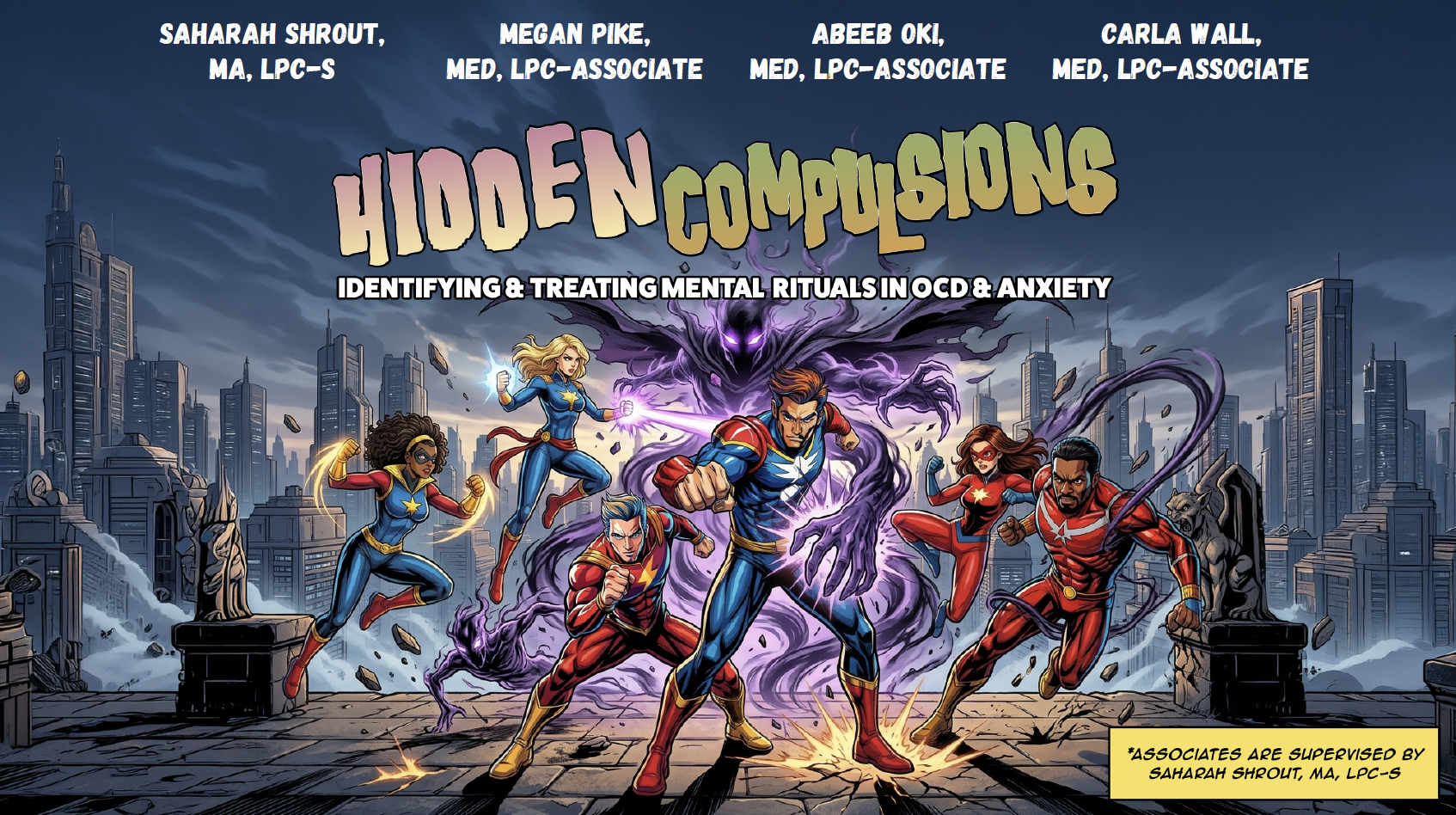
The Hidden Compulsions: Identifying and Treating Mental Rituals in OCD and Anxiety
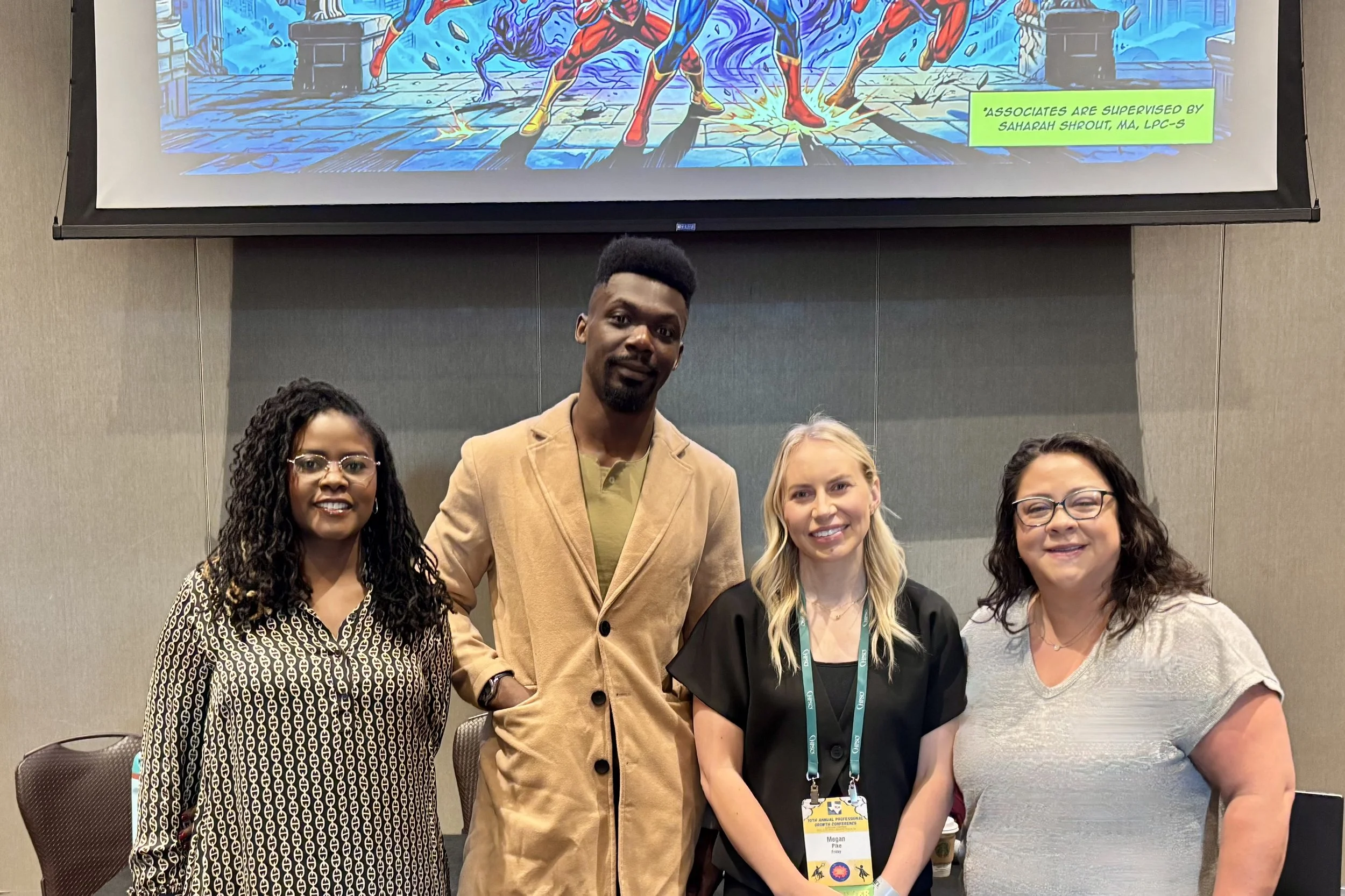
Pictured from left: Carla Wall, Med, lpc-associate, abeeb oki, med, lpc-associate, megan pike, med, lpc-associate & Saharah shrout, ma, lpc-s
Not all compulsions are visible. Some of the most persistent OCD symptoms happen entirely within a person's mind.
Rumination, mental checking, internal reassurance-seeking, reviewing conversations, and attempts to achieve certainty can all function as compulsions. Because these behaviors are less obvious than traditional physical rituals, they are frequently overlooked or misunderstood in treatment.
The presentation explored how counselors can better recognize, assess, and treat these hidden compulsions using evidence-based approaches, including Exposure and Response Prevention (ERP) and Acceptance and Commitment Therapy (ACT).
Through clinical examples, therapist-client dialogue demonstrations, and practical exposure-planning strategies, participants explored ways to identify subtle mental rituals and help clients disengage from the cycle of rumination and reassurance-seeking.
From Insight to Action: Bridging the Gap Between Talk Therapy and Exposure-Based Treatment for OCD
For the second presentation, Saharah Shrout presented alongside Andrea Alvarez, M.Ed., LPC-S; Katy Rothfelder, MA, LPC; and Azul Lozoya-Gomez, MA, LPC-Associate.
Why can someone understand their OCD so well and still feel stuck?
This presentation examined one of the most important challenges in OCD treatment: the difference between understanding the disorder and changing the behaviors that maintain it.
Traditional talk therapy strategies, including cognitive restructuring, reassurance, and excessive processing, can sometimes unintentionally reinforce OCD when they become part of the compulsive cycle.
The presenters explored common treatment pitfalls and introduced practical ways to shift from insight-oriented discussions toward action-based interventions using Exposure and Response Prevention (ERP).
Participants learned how to recognize reassurance-seeking, identify treatment-interfering behaviors, reduce accommodation of OCD, and incorporate exposure-based strategies into their clinical work. Through case examples and therapist-client dialogue demonstrations, the session emphasized how counselors can move beyond repeatedly discussing anxiety and begin helping clients practice responding differently to it.
Why This Work Matters
At OATH Therapy, we believe that effective OCD treatment requires more than simply understanding why someone feels anxious. It requires recognizing the patterns that keep anxiety going and helping individuals build the willingness and skills to respond differently.
We also recognize that many counselors encounter clients with OCD and anxiety across a variety of clinical settings. Increasing awareness of mental compulsions, understanding the limitations of reassurance-based interventions, and expanding access to evidence-based treatment can make a meaningful difference in the care clients receive.
Opportunities like TCA allow us to share specialized knowledge, learn from other professionals, and contribute to a broader conversation about improving mental health treatment throughout our state.
Stronger Together
We are grateful to the Texas Counseling Association for creating opportunities for professional connection, education, and collaboration. We also appreciate everyone who attended our sessions, contributed thoughtful questions, shared clinical experiences, and engaged in these important conversations.
We are especially proud of the clinicians who came together to share their expertise and contribute to these discussions. Professional collaboration helps strengthen our field, expand access to specialized knowledge, and ultimately improve the care available to individuals and families navigating OCD and anxiety.
We returned from this year's conference feeling energized by the connections we made and encouraged by the growing interest in evidence-based OCD treatment.
Because better outcomes begin with better understanding, and sometimes the most important step is knowing when it's time to move from insight to action.
Interested in learning more about OCD, ERP, or specialized anxiety treatment? OATH Therapy provides evidence-based treatment for OCD and anxiety disorders for children, adolescents, and adults in the Greater Houston area and throughout Texas via secure telehealth.
Learn more about our services at oaththerapy.com.