

Weather Anxiety During Hurricane Season: How to Stay Prepared Without Letting Anxiety Take Over
Summer in Texas often means sunshine, pool days… and keeping one eye on the weather.
Have you found yourself refreshing the radar multiple times a day, checking several weather apps, or feeling unable to relax every time storms are in the forecast? This might be a sign of a more persistent fear and not just a quirky habit
For many people, hurricane season doesn’t just bring changing weather. It brings constant worry, hyper-vigilance, and a mind that struggles to settle.
The good news?
You can prepare for severe weather without letting anxiety control your summer.
Being prepared helps.
Feeling like you must stay on high alert 24/7 is often anxiety, not preparedness.
What Is Weather Anxiety?
Weather anxiety is persistent worry about hurricanes, flooding, tornadoes, severe thunderstorms, extreme heat, or other weather-related events.
For many Texans, these fears make sense.
Maybe you’ve experienced Hurricane Harvey.
Maybe you’ve lost power for days.
Maybe you’ve watched floods devastate nearby communities.
These experiences can understandably make your brain more alert.
The goal isn’t to ignore weather risks.
The goal is learning when your brain has shifted from reasonable preparedness into constant threat monitoring.
Signs Weather Anxiety May Be Taking Over
You might notice yourself:
Refreshing radar maps throughout the day
Checking multiple weather apps
Reading hurricane forecasts weeks before storms are expected
Feeling unable to enjoy plans because “something could happen”
Repeatedly asking loved ones if they think everything will be okay
Feeling tense every time it rains
Staying mentally “on guard” for months during hurricane season
If several of these sound familiar, anxiety may be driving the bus.
Why Doesn’t Checking the Forecast Make Me Feel Better?
Here’s something many people don’t realize…
Anxiety isn’t looking for information.
It’s looking for certainty.
Unfortunately, weather is one of life’s greatest reminders that certainty doesn’t exist.
Forecasts change.
Storms shift.
Meteorologists update predictions.
Because certainty is impossible, anxiety simply asks you to check…
…one more time.

The Anxiety Trap
“If I just check one more forecast, I’ll finally feel prepared.”
Temporary relief.
Then the urge comes right back.
When Weather Anxiety Is About More Than the Weather
Sometimes weather anxiety isn’t just about storms.
It taps into something deeper.
Storms remind us that life can feel unpredictable.
They remind us that we cannot control everything.
Our brains naturally try to protect us from that discomfort.
These coping strategies are attempts to create certainty, control, or meaning when life feels uncertain.
Three Common Ways Anxiety Tries to Protect Us
1. Chasing Certainty
Your brain starts making definitive predictions:
“This storm is definitely going to hit us.”
“I have to know exactly what’s going to happen.”
Certainty feels safer than uncertainty, even when the prediction is frightening.
2. Becoming “Perfectly Prepared”
Preparedness becomes perfectionism.
You may think:
“I need to monitor every update.”
“If I forget something, my family won’t be safe.”
“I can’t stop paying attention.”
Preparation is helpful.
Perfection isn’t possible.
3. Mistaking Checking for Control
Checking feels productive.
But after the tenth radar refresh…
Has your safety changed?
Or has your anxiety temporarily quieted?
Many anxiety-driven behaviors reduce distress for a few moments while unintentionally reinforcing the cycle long-term.
Preparedness vs. Anxiety
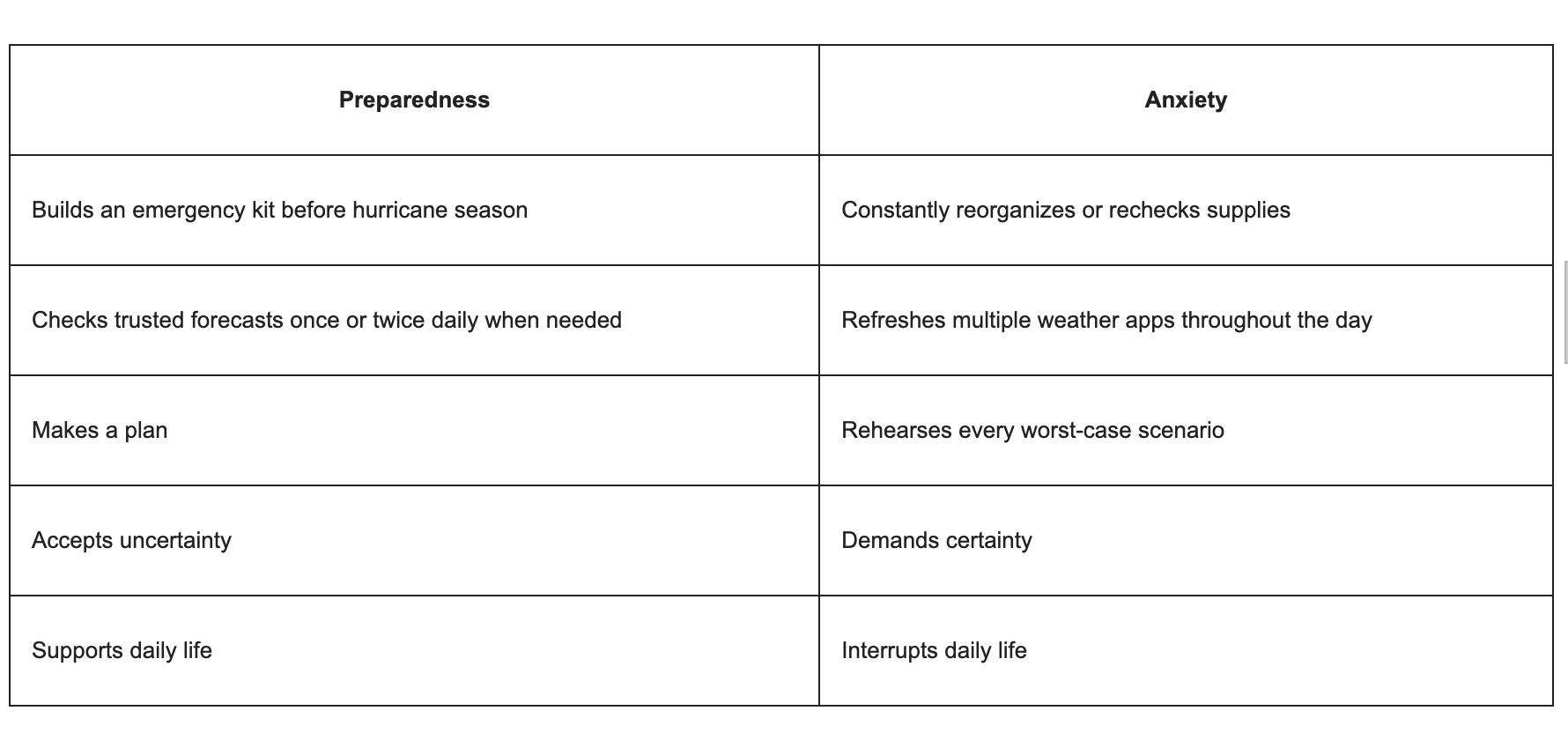
Ask Yourself:
“Am I checking because I need new information…
or because I’m hoping to feel less anxious?”
What Actually Helps?
At OATH Therapy, we use evidence-based approaches including CBT, Exposure and Response Prevention (ERP), and Acceptance and Commitment Therapy (ACT) to help people develop a different relationship with uncertainty.
Treatment may include learning to:
• Reduce compulsive weather checking
• Resist reassurance seeking
• Notice anxious thoughts without automatically responding to them
• Differentiate real preparedness from anxiety-driven behaviors
• Stay connected to work, family, hobbies, and values during storm season
The goal isn’t to eliminate uncertainty.
It’s to stop organizing your entire life around it.
Five Ways to Prepare Without Feeding Anxiety
Build your hurricane kit before you need it.
Choose one or two trusted weather sources.
Set specific times to check updates.
Notice when checking becomes reassurance seeking.
Continue living your life between forecasts.
Preparedness should support your life.
Not replace it.
You Don’t Have to Spend the Entire Summer Waiting for the Next Storm
Living on the Gulf Coast means accepting that hurricanes are part of life.
But they don’t have to define your summer.
You can be prepared.
You can acknowledge uncertainty.
You can enjoy time with your family.
You can make memories.
And you can do all of that without anxiety calling the shots.
You Don’t Have to Navigate Weather Anxiety Alone
If weather anxiety is interfering with your daily life, therapy can help.
At OATH Therapy, we specialize in evidence-based treatment for anxiety, OCD, and related conditions using CBT, ERP, and ACT. Our goal isn’t to help you stop caring about the forecast. It’s to help you stop feeling like you have to organize your life around it.
Ready to learn more?
Contact OATH Therapy today to schedule a consultation and discover how treatment can help you move from constant vigilance to confident preparedness.
Meet the Author
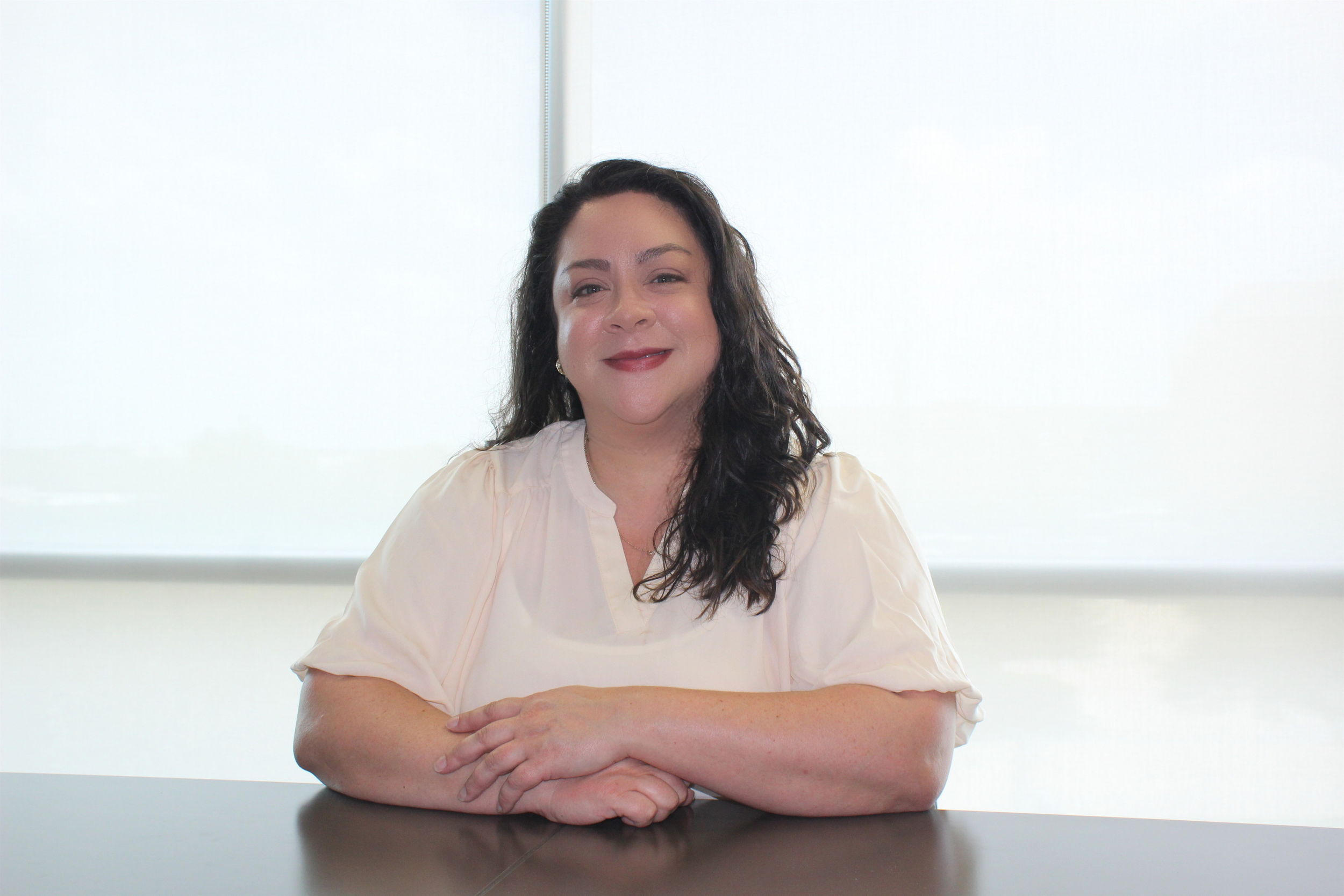
Saharah Shrout, MA, LPC-S is the owner of OCD & Anxiety Treatment of Houston (OATH Therapy) and dedicated to providing quality treatment for those with Obsessive-Compulsive Disorder (OCD), OC Spectrum disorders, anxiety disorders and Body Focused Behavior Disorders (BFRB’s). Saharah is an advocate for increasing public awareness about proper treatment for OCD and anxiety disorders and strives to reduce stigma surrounding mental illness.
Saharah received her BA in Psychology and Sociology and MA in Christian Counseling from Houston Baptist University (now Houston Christian University). When not at work, Saharah enjoys spending time with her family and is an unabashed podcast enthusiast.
Saharah has treated OCD, OC-Spectrum Disorders and Anxiety Disorders since 2003. She was trained at The Menninger Clinic OCD Program and went on to become the Program Manager of the Houston OCD Program (now OCD Institute-Texas) where she worked in outpatient, intensive outpatient and residential treatment settings. Saharah has also been trained in SPACE (Supportive Parenting for Anxious Childhood Emotions) treatment, the Bergen 4-Day Treatment (B4DT) model and is a graduate of the IOCDF’s Behavior Therapy Training Institute (BTTI).